
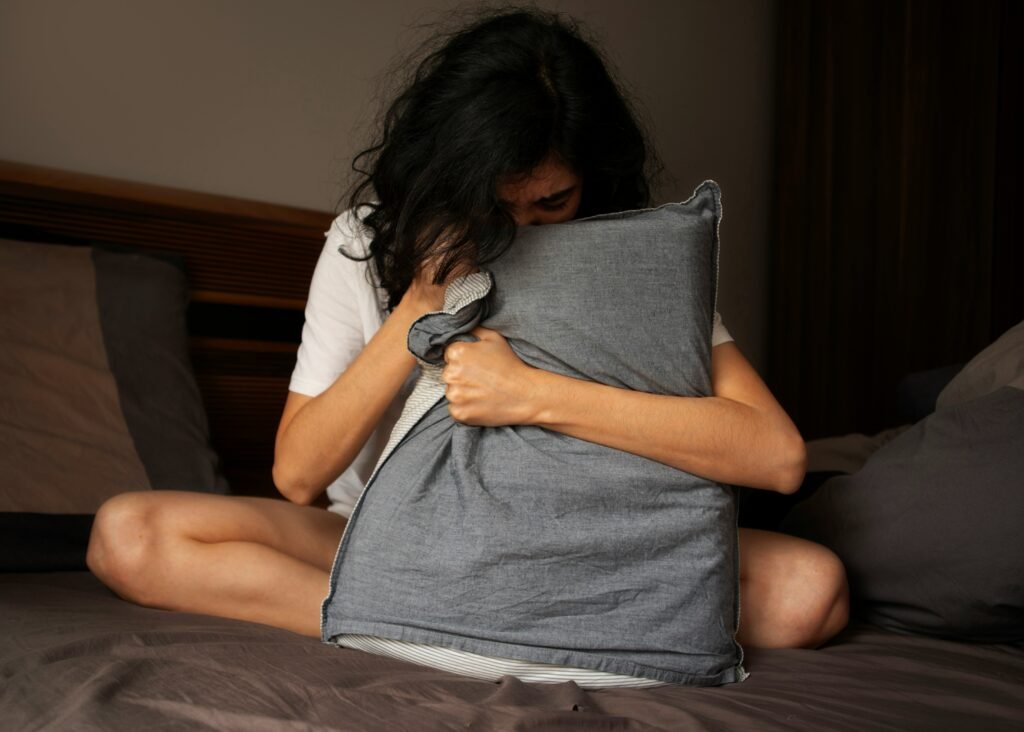
Sleep apnea often looks clinical on paper — apnea-hypopnea index, oxygen desaturations, arousals — but for the people I meet, it’s far more personal. It’s the exhaustion that settles into every corner of the day, the frustration of waking up gasping, the fear of never feeling rested again.
I’ve sat beside patients who’ve whispered that they dread bedtime. I’ve helped fit masks while listening to stories of sleepless nights and heavy mornings.
And I’ve felt that same helplessness in my own way.
For years I have struggled with insomnia that wouldn’t let go. I tried Lunesta for a while, which helped in moments but never felt like the deeper answer I was searching for. It wasn’t until I went through Cognitive Behavioral Therapy for Insomnia (CBT-I) myself that I truly began to understand how layered sleep can be — and how much healing comes from retraining the mind to rest.
That experience changed how I approached every patient who walked in for a sleep study or follow-up. Because I know that even when machines and numbers matter, compassion, small rituals, and patience matter just as much.
Making Friends With Your CPAP
One of my first patients after becoming a respiratory consultant in durable medical equipment (DME) told me she felt like her CPAP mask was a “plastic reminder of failure.” It broke my heart, but I understood that feeling. The truth is, it takes time to feel comfortable with therapy.
Positive Airway Pressure (PAP) therapy is still the gold standard for sleep apnea. It keeps the airway open so breathing stays smooth and steady through the night. For some, it’s life-changing; for others, it’s an adjustment. Studies show that when patients receive help with comfort issues and flexible pressure modes, they use their therapy longer and feel better during the day (Aloia et al., 2007).
What I tell my patients — and what I remind myself when I struggle with consistency — is that routine makes everything gentler. Try putting on your mask while reading or listening to calming music before bed. Let your brain connect the mask with peace, not pressure. It’s one of the simplest ways to shift the experience from “I have to” to “this helps me rest.”
Healing Insomnia Alongside Sleep Apnea
Many of my sleep apnea patients also have trouble falling or staying asleep. The overlap between sleep apnea and insomnia is so common it even has a name now — COMISA.
When I began CBT-I, I learned how much of my insomnia came from fear — fear that I’d never fall asleep, fear of what the next day would feel like if I didn’t. CBT-I helped retrain my thoughts, rebuild trust in bedtime, and create space for rest again.
I’ve seen the same transformation in patients who combined CBT-I with their PAP therapy. Research shows that doing so increases nightly CPAP use by more than an hour (Ong et al., 2019) and gradually improves sleep quality while reducing apnea severity (Sweetman et al., 2020). Another study even found that sleep restriction therapy, when used carefully, can lower the number of breathing events each night (Sweetman et al., 2024).
If you’re living with both insomnia and sleep apnea, this combination can be powerful. It takes time, but every night of better rest builds on the one before it.
Moving, Nourishing, and Breathing for Better Rest
One thing I’ve learned working in sleep and neurodiagnostics is that movement during the day changes the quality of sleep at night. You don’t have to run marathons. Even moderate exercise — walking, gentle weights, yoga — can improve oxygen levels and reduce apnea severity (Aiello et al., 2016; Chen et al., 2022).
I once worked with a patient who started walking her dog around the block each morning. Three months later, her apnea-hypopnea index had dropped, and she said, “I don’t even dread my nights anymore.” It reminded me that healing can look like small, steady steps — literally.
Weight loss, when appropriate, can also lessen symptoms in patients. In the Sleep AHEAD study, people who lost around 20 pounds saw marked improvement in their apnea (Foster et al., 2009). And lifestyle research continues to show that balanced eating, regular movement, and avoiding alcohol near bedtime can reduce the likelihood of apnea altogether (Chen et al., 2024).
When I think about sleep care, I don’t think about rules. I think about rhythm — the daily rhythm that tells your body it’s safe, nourished, and ready to rest.
Position and Preparation
A small but meaningful change for many people is sleeping on their side instead of their back. I often suggest a supportive body pillow (NOT an affiliate link, just a great, affordable option) to encourage that position. It can make a big difference for those whose apnea worsens when lying flat.
And, of course, creating a restful environment helps every kind of sleeper. Lower the lights, quiet your space, and give yourself at least half an hour away from screens. My favorite part of the evening is the few minutes of slow breathing before bed.
Inhale through your nose for a slow count of four.
Feel your lungs expand and your chest rise.
Hold your breath softly for a count of seven.
Let the stillness settle, like calm water.
Exhale through your mouth for a count of eight.
Release the air and any tension that lingers.
That simple rhythm helps the mind unwind — something I leaned on heavily when I was working through my own sleepless nights; and still use. It’s a reminder that your breath is always there to bring you back to calm.
A Gentle Path Forward
Sleep apnea is complex, but it doesn’t have to steal your peace. Whether you’re adjusting to CPAP, learning CBT-I, or finding your footing through exercise and diet, every effort you make adds to your foundation of rest.
Here’s what I’ve seen — in the lab, in research, and in my own journey:
- Consistency with CPAP or PAP therapy truly matters. Comfort is possible.
- CBT-I is life-changing for those who also face insomnia.
- Movement and mindful habits support breathing and emotional well-being.
- Position and environment help the body settle into rest.
Sleep is not a luxury. It’s the foundation for healing, memory, and balance. I’ve lived the frustration of restless nights, and I’ve witnessed the joy of patients rediscovering what deep rest feels like. The science guides us, but the heart carries us through.
Your body remembers how to rest — and it’s never too late to teach it again.
Further Reading & Research
If you’d like to explore the studies that support these approaches, here are a few key references that guided this post:
- Aloia, M. S. et al. (2007) Improving comfort and consistency with CPAP through flexible pressure settings. Sleep, 30(4), 471–477. PubMed
- Ong, J. C. et al. (2019) CBT-I improves nightly CPAP use in patients with insomnia and sleep apnea. Sleep, 42(10), zsz147. PubMed
- Sweetman, A., Lack, L., & Catcheside, P. (2020) CBT-I shown to gently improve sleep patterns and reduce apnea severity. Sleep, 43(7), zsaa002. Oxford Academic
- Sweetman, A. et al. (2024) Sleep restriction therapy can reduce breathing events and improve sleep continuity. Sleep, 47(8), zsad099. PubMed
- Aiello, K. D. et al. (2016) Exercise training improves apnea severity and oxygen levels during sleep. Respiratory Medicine, 116, 85–92. PubMed
- Chen, Y. et al. (2022) Regular exercise lowers apnea-hypopnea index and daytime fatigue. Int. J. Environ. Res. Public Health, 19(17), 10845. MDPI
- Foster, G. D. et al. (2009) Weight loss reduces apnea severity in adults with type 2 diabetes. Arch. Intern. Med, 169(17), 1619–1626. JAMA Network
- Chen, J. et al. (2024) Healthy lifestyle and weight management linked to lower risk of sleep apnea. BMC Pulmonary Medicine, 24, 3404. BMC
With calm,
Zara Nova
Breathe well. Live Gently

About Zara
Zara is a respiratory therapist and wellness writer who believes breathing well is the first step to living well. Through BreatheNova, she shares gentle ways to support calm, rest, and renewal at every stage of life.
Disclaimer: This post is for educational purposes only and may contain affiliate links. It’s not a substitute for medical advice—always consult your healthcare provider.